Loading... Please wait...

Categories
Categories
)

Product Description
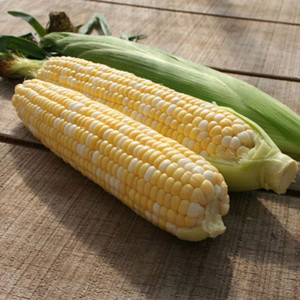
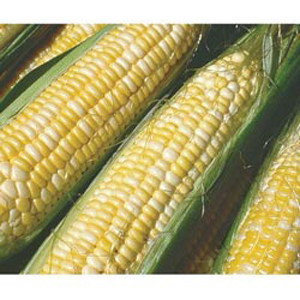
| 77 Days to Maturity. Bi-Color Extra Tender 277A F1 Sweet Corn Seeds produce exceptionally sweet corn with outstanding flavor. Isolation is required to avoid cross pollination, and warm soil temperature of at least 65 degees is recommended. Treated seed. 100 seeds per package. To extend your corn harvest, make successive plantings weekly up to mid-July, or plant varieties with differing maturity dates.Grows best in full sun (at least 6 hours of direct sun per day). Cultivate carefully to avoid damaging surface roots. Use USDA Hardiness Zone 3 - 11 as your guideline for the appropriate climate for this plant. Refined ears with 18 to 20 rows of bicolor kernels are produced on 6 to 6-1/2' plants that are tilled. The cylindrical, well-filled ears are covered with tight, medium green husks and attractive flag leaves. Eating quality is exceptional, with outstanding sweet flavor. Intermediate resistance to NCLB, SCLB, and Stewart's wilt. Isolation required. Zea mays: Synergistic corn has 75% sugar enhanced kernels and 25% Supersweet kernels. It combines the exceptional tenderness and sweet corn flavor of SE/se varieties with the extra sweetness, extended shelf life and field-holding ability of sh2 varieties. For best results, isolate Synergistic corn from any other corn. For best germination, soil temperature should be at least 70° |
| Vegetable Garden – Tips on Growing Sweet Corn From Seed Sowing
Growing
Sweet Corn will need plenty of space for 2 reasons:
Corn plants need a place in the garden that will get full sun and has fertile, well-drained soil with a pH of 6.0 to 6.8. Seedlings can be set out as soon as the last spring frost has passed. Space transplants of larger-growing varieties 8 to 12 inches apart. In case of a surprise late frost, be prepared to cover seedlings with a fabric row cover. In cold climates you can plant in a raised bed covered with black plastic (infrared transmitting plastic) that will warm the soil. If possible, lay the plastic a week or so before planting. Plan to fertilize twice because corn is a hungry plant. Before setting out seedlings, amend the soil with compost and mix a balanced organic or timed-release fertilizer into the soil. About a cup of 10-10-10 per 10 feet of row is a good general rate, but trumps that with the rates given on the label of any fertilizer you are using. About 6 weeks or so later, when the plants start to produce tassels, fertilize them again. (If you amend the soil with cottonseed meal or other high-nitrogen amendment, it may not be necessary to feed the second time.) Use a hoe or trowel to mix the fertilizer into the top inch of soil between the plants. After this booster feeding, water your corn weekly if the weather is hot and dry. Normal plants should grow fast with dark green healthy leaves. Corn will tell you if it is hungry by turning very light green. If so, feed again. Corn grows fast and needs lots of water to grow properly. It also has shallow roots that make it susceptible to drought. Soaker hoses will insure that your corn gets the water it needs. However, for a large planting, soaker hoses may not be practical, in which case you will need a sprinkler or two with a large coverage area. Native Americans in arid climates planted corn in basins to catch spring rainwater and help keep the corn roots down where water would be available longer. The basin was about 4 inches deep and 2 to 3 feet wide with a raised ridge made from the excavated soil around it. Plants were arranged so that they formed a spiral from the center to help with support in wind and with pollination. If you live in an arid climate or a hot climate and have poor sandy soil, as in the Coastal Plain, this technique could help insure a good harvest. Most corn plants will yield at least 2 ears per stalk. Hybrids may yield more. It can be hard to know when an ear of corn is ready to harvest because you can’t see inside the husk. Look at the silks. They should be brown and dry with just a little fresh green at the base. Squeeze the husk to see if the ear inside feels plump, not skinny. If the ear seems ripe, check by peeling just enough of the husk back to expose a couple of inches of the ear. Poke a kernel with your fingernail. The corn is ready to pick if it bleeds a light milky sap like skim milk. If the liquid is clear, the ear is not ready. Ears that are too ripe will look too milky, like cream versus skim milk; they often taste starchy. Of course, remove them, too. Perfectly ripened ears also taste sugary-sweet when sampled raw. When possible, harvest sweet corn in the morning, when the ears are cool. To remove the ear, use one hand to hold the corn stalk and the other to pull the ear down and away from the stalk, twisting a little until it breaks off. Place harvested ears in the refrigerator right away. When kept chilled, ears will hold their sweet flavor for up to a week. Extra-sweet corn can be blanched and frozen, on or off the cob. Allow ears of grain corn to stay on the plants until the husks dry to tan. Gather them during a period of dry weather, and pull back the husks before using the ears as seasonal decorations. Remove all husks before storing dried ears for the winter in a cool, dry place. Corn plants that are blown over by gusty storms usually right themselves after a few days of sunny weather. As you shuck and clean your corn, pop off ear tips damaged by corn earworms. The different types of corn should not be allowed to cross-pollinate. That means that standard, open pollinated types, and super-sweet types need to be planted in such a way that pollen from one type does not reach another type. If you or a nearby neighbor grow multiple types, be sure that they are isolated by at least 250 feet or that their timing is such that they are not in bloom at the same time. If not, the pollen from types that are not the same can muddy their characteristics to the point of ruining sweetness and flavor. USDA Hardiness Zone -First Frost Date- Last Frost Date
A Note about Isolation
Growing Sweet Corn
Sweet Corn Types
|