Loading... Please wait...

Categories
Categories


Product Description
Lobularia maritima
|1000 Seeds|
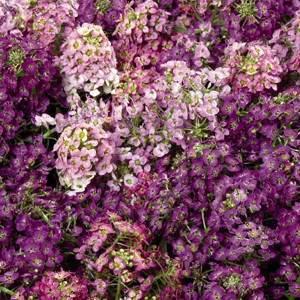
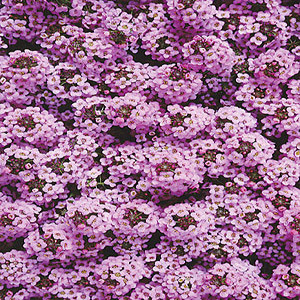
The original "Wonderland" Alyssum and 1978 Fleuroselect Bronze Medal Winner. The richest cherry-rose Alyssum available. A great addition to any bed, border or combo pot. This series produces dwarf plants with a vigorous spread. All are well-matched for plant height and bloom timing. Wonderland Series is 4" tall and 12" wide.
(Package 1000 Seeds)
Garden Seeds – Tips on Growing Alyssum From Seed |
| Stage 1 Radicle (Embryonic Root) Time of emergence 2-5 days
Stage 2 Hypocotyl (Stem and cotyledon emergence) Time of emergence 7-10 days.
Stage 3 Cotyledon (Growth and development of true leaves) Timing of this growth 14-21 days.
Stage 4 Getting ready for transplant/growing on period
USDA Hardiness Zone -First Frost Date- Last Frost Date
Terms and their meaning: EC=Electrical Conductivity Plant injury resulting from excessive soluble salts may first occur as a mild chlorosis of the foliage, later progressing to a necrosis of leaf tips and margins. This type of injury is largely attributed to the mobility of soluble salts within the plant. As these salts are rapidly translocated throughout the plant, they accumulate at the leaf tips and margins. Once the salts reach a toxic level they cause the characteristic "burn" associated with excessive salts. For an accurate reading get an EC meter. Soluble salts in irrigation water are measured in terms of electrical conductivity (EC). The higher the salt content the greater the EC. In general EC values exceeding 2.0 are considered toxic to plant growth. Monitor your water quality frequently in order to avoid potential problems from soluble salts. FC=Foot Candles Light intensity is a primary factor in the photosynthesis of all plants. Full unobstructed sunlight has an intensity of about 10,000 fc. Where as an overcast day will produce an intensity of around 1,000 fc. A window sill or light around a window or patio glass door can range from 100 to 5,000 depending of course what direction the light source is facing, or the time of year and your latitude. PPM=Parts Per Million This unit of measure is relatively unique to the greenhouse industry and often there is some confusion on how ppm is calculated. I. To calculate the ppm contained in 1 ounce of material first solve for B: A x 75 = B A = the % active ingredient (AI) in the fertilizer B = ppm contained in 1 ounce of the material in 100 gallons of water Example: Calcium nitrate contains 15% N (0.15 x 75 = 11.25). If 1 ounce of calcium nitrate is dissolved in 100 gallons of water the solution will contain a II. To calculate the number of ounces of material required to make up a desired ppm concentration solve for C: C = Desired ppm conc. / B B = ppm contained in 1 ounce of the material in 100 gallons of water (from above). C = number of ounces of material to add to 100 gallons of water to achieve the desired concentration. Example: To make up a 250 ppm solution of calcium nitrate first multiply the AI x 75 (.15 x 75 = 11.25). Next divide the desired concentration by 11.25 (250/11.25 = 22). To make up a 250 ppm solution of calcium nitrate you would add 22 ounces to 100 gallons of water. aproximately 11.25 ppm N. |