Loading... Please wait...

Categories
Categories
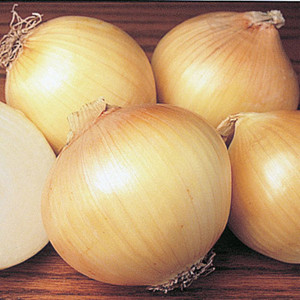
Organic Sweet Valencia- Day-Neutral Variety Onion Seeds


Product Description
Vegetable Garden - Tips on Growing Onion from Seed |
|
Sowing
Seed Depth: ¼-½" (.65-1.3cm)
START INDOORS:
DIRECT SOW:
USDA Hardiness Zone -First Frost Date- Last Frost Date
THE INFLUENCE OF DAY LENGTH
Bulb initiation in onions, leeks are affected by two environmental codes: day length and temperature. Onions are stimulated to bulb up and out under the lengthening days of spring that turn into summer. Generally, day lengths of 12–16 hours induce the bulb to expand. In addition, many of the onion varieties are classified in accordance to the photo-period (approximately) necessary to induce bulb growth.
THE EFFECTS OF TEMPERATURE
Temperature plays a secondary role in bulb initiation.
GARDEN HINTS:
If you are like most gardeners, you want your onions sweet, the sweetness of an onion is determined by both nurture and by the growing environment. For the mildest in onions, start with a variety known to produce sweet, mild-flavored bulbs such as Walla Walla (at northern latitudes). To get the plants off to a strong start, fertilize by mixing an organic or timed-release fertilizer into the ground below the planting furrow (a raised row) before your plant your onions. This fertilization technique, is called "banding," which places the nutrients right along where the young onion roots will find them. They will use up the nutrient supply as they grow. This is a benefit because later as the onions form under lean conditions, they tend to taste sweeter. Your plants will need abundant sun and good drainage, and they grow best when the soil pH ranges between 6.0 and 6.8. Raised beds or raised rows are called furrows and they are made by mounding up soil, especially if your soil is heavy clay. Mix a 2-inch layer of compost into the soil before placing an organic or timed-release fertilizer into planting furrows, be sure to follow the label rates. Set plants 1 to 2 inches deep, so that their roots will be well covered with soil but the top of the transplant’s neck is not buried too deeply. You do not want the part of the neck where the leaves grow away from the clear sheath to collect soil or water down between the young leaves or they will rot. Space transplants 6 inches apart in furrows 12 inches apart. Plants will appreciate a starter solution of liquid fertilizer after planting.
Onions roots are shallow and not very efficient at taking up moisture, so they need a steady supply of water to grow without interruption. Although they actually recover well from drought and start growing again when watered, it is best to keep the soil consistently moist until the bulbs enlarge.
You may mulch with a light layer of weed-free and herbicide-free grass clippings or fine mulch. Onions naturally push toward the surface as they form bulbs and its best if the tops of the bulbs bask in dry sun. Remove any mulch that might keep the expanding bulbs excessively moist.
An optional note about your seedling bundles: Seedlings that are about the diameter of a pencil produce the biggest, most beautiful bulbs. Very small seedlings set at close spacing can serve as a second crop of scallions. Use the pencil-sized plants to grow to full-sized onions so juicy that they spurt when you slice them.
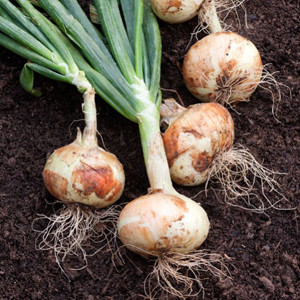
Remember not to plant too deeply in order to avoid problems with rot, and make a hill, or furrow, if needed for better drainage in clay soil. You can harvest young onions just a few weeks after planting if you want to use them as “spring onions” or scallions. There is no perfect size or full-sized bulbs, let onions grow and mature. They are ready to harvest when the bulbs are big and the tops begin to turn yellow and fall over. Pull them up, shake off the soil, and lay them out to cure with the tops still attached.
Any warm, airy location is a good place to do this; you can even sling them over a fence as long as they are not rained upon. Bulbs must stay dry and have good air circulation. As the onions cure, the roots will shrivel and the necks above the bulbs will slowly dry – a natural process that helps to seal the top of the bulb, making the onions less likely to rot. After 7 to 10 days, clip off the tops of the onions and the roots with pruning shears, remove as much dry dirt as possible without taking off the papery outer skins, and store your onions in a cool place. Very sweet, juicy onions store best in the refrigerator.
|