Loading... Please wait...

Categories
Categories
)

Product Description
| States that are included are: CT, DE, ME, MD, MA, NH, NJ, NY, PA, RI, VT and WV. | |||||||||
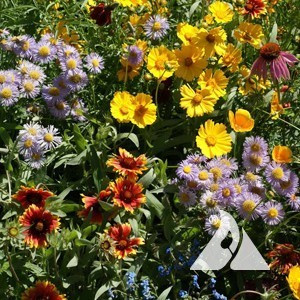
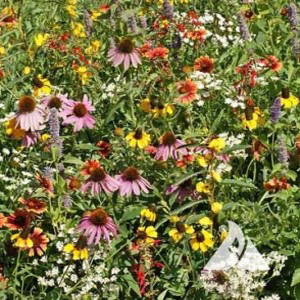
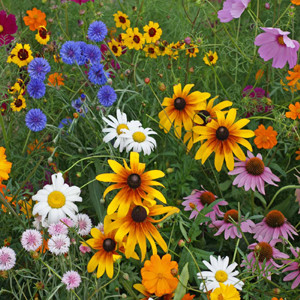
| Our Northeast Wildflower mix represents the changing history of the Great Northern forest - from the managed woodland gardens of the Native Americans to the opened-up farm lands of later Europeans. Today, northeast wildflowers combine both the historic native plants and the introduced European garden flowers brought by colonists. This is a glorious mixture of ethereal poppies, sturdy Coneflowers, and charming little plants like Dianthus and Flax. There will be so much for you to see and enjoy when your Northeast Wildflower Seed Mix begins blooming around your home, creating a patchwork of bright colors, pretty enough for a postcard! | |||||||||
| This Northeast Wildflower Seed Mix includes: Annual Baby’s Breath, Black-Eyed Susan, Catchfly, Cornflower, Corn Poppy, Dwarf Evening Primrose, Foxglove, Gayfeather, Indian Blanket, Lance-Leaved Coreopsis, New England Aster, Perennial Lupine, Purple Coneflower, Scarlet Flax, Shasta Daisy, Siberian Wallflower, Smooth Penstemon, Spurred Snapdragon and Sweet William Pinks | |||||||||
| Where to grow this wildflower seed mix: | |||||||||
| Tips On Growing Wildflowers - How Much To Plant, How To Care For Them Every garden space has its own square footage. Multiply the length of your yard by its width to get an estimate that's good enough to work with for scattering your wildflower seed. Depending upon your tastes, you may want to scatter your wildflower seeds sparely - a few here, a few there - or your ideal may be a meadow densely covered with glorious bloom. 1 Lb. of wildflower seed will provide scattered, more roomy cover for a yard that is 4000 sq. feet, while that same 1 Lb. will turn a 1500 sq. foot garden into a densely flowering display. | |||||||||
| |||||||||
|
Tips On When And Where To Plant Wildflower Seeds: First, find out what your gardening zone is. Take a look at our zoning information. Don't plant wildflowers when frost is still a danger in the early months of the year, or when frost is about to set in near year's end. In most regions, the optimal planting time for wildflowers begins as soon as all danger of frost has past and warmer days are ahead. Do you live in California, Florida or southern Texas? Times of frost are minimal in your area, and you can plant wildflowers in all but the coldest weeks of the year, or the very hottest part of summer. In California, most gardeners plant their wildflower seed in the early winter, so that it is sitting there ready for the first rains to wake it up! In Florida, however, fall is a better time to plant wildflower seeds. Are you in a rainy corner of the country? Plant before your local rainy season begins, ensuring that your wildflowers will have plenty of time to germinate and establish themselves before summer heat hits in. In many parts of the country, both annual and perennial wildflower seeds will become permanent parts of the garden, growing either via reseeding or by living on from year to year on their own roots. If you aren't sure about your zone or optimal wildflower planting time, you can contact your local Ag Department. How To Plant Your Wildflower Seeds: Don't rake or cover your wildflower seeds with dirt. Instead, after you've finished scattering the wildflower seed, simply walk over the area in your shoes - or barefoot if you're a nature-loving guy or gal! This will gently compress the seeds into the soil without burying them. The best time to plant in your area depends on the climate and rainfall patterns as well as the species you are planting. In cool climates, plant annuals, perennials or mixtures of annuals and perennials in spring, early summer or late fall. Fall plantings should be late enough so that seeds do not germinate until spring. Perennials can also be sown in early fall provided that there are at least 10-12 weeks of growing time before the plants go dormant for the winter. Late fall plantings are advantageous when supplemental irrigation cannot be provided and adequate rainfall is anticipated in the spring. In mild climates, plant during the cooler months of the year; fall through spring, for best results. Fall plantings done prior to periods of rainfall will insure an early display of flowers the following spring. Moisture: Many wildflowers benefit from some fertilization if the soil does not have adequate nutrients. Some wildflowers do fine in poor soils, while others require a more fertile environment. We recommend that a soil test be performed when soil quality is unknown. If the soil needs improvement, use a low nitrogen fertilizer with a 5-10-10 ratio or add organic matter such as weed-free straw or grass clippings, well-rotted compost, peat moss, or leaf mold. In addition to adding nutrients, organic materials enhance soil structure and encourage beneficial microorganisms. Avoid over-fertilizing which may promote weed growth and lush foliage rather than flowers. Each fall, you will need to do an annual mowing of your wildflower garden. Set your mower to high and go over the entire area. And that's all you need to do. Unlike other types of gardening where you are buying starts or established plants and putting them in specific places, wildflower gardening comes with a built-in element of adventure. You will sow your seeds just where you want them this year, but Mother Nature may give you some surprises next year when she resows the seeds and comes up with a whole new work of living art for your enjoyment! |