Loading... Please wait...

Categories
Categories


Product Description
Petunia x hybrida
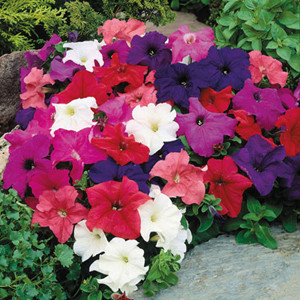
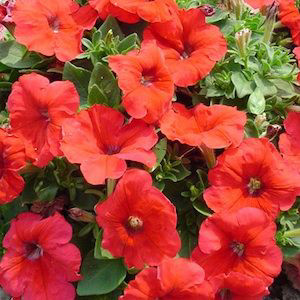
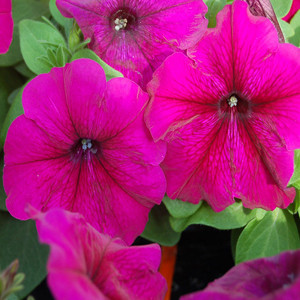
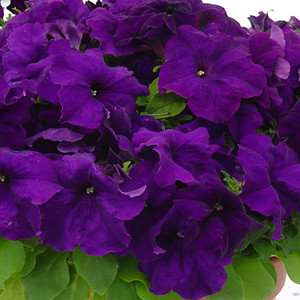
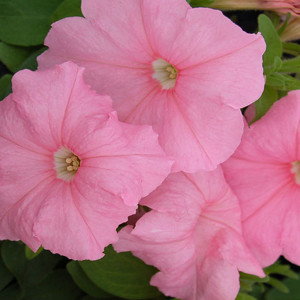
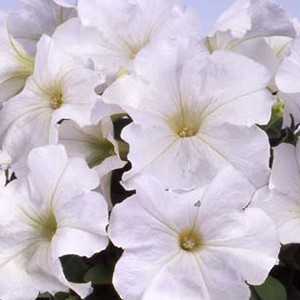
Mix includes Blue, Rose, Purple, Pink, White, Salmon, Red, Sweet Pink, Deep Purple, and Pink Morn, this is the only natural dwarf non-stretching multiflora Petunia on the market. A unique series that has proven to be of great value to consumers. Low Grow Approved. Consider the Mambo’s GP the multiflora counterpart to the genetically dwarf grandiflora Limbo series. Like their grandiflora cousins, Mambo GP petunias are the next generation of breeding that emphasizes garden performance along with its naturally low growing plant habit. This attribute allows them to be produced with little to no growth regulators, resulting earlier flowering and larger blooms than most typical multifloras. At the end of the summer when petunias are known to get rather leggy, Mambo GP maintains it compact height but will have a slightly wider plant spread than its predecessor, filling in gardens and landscapes more quickly. Height: 8-10", 15-18" spread. Mambo shows great weather resistance which results in superb garden performance. Impressive flowers that "Beat the heat"
Tips on How to Grow Petunia from Seeds |
| Time Frame when plants are receptive to flower initiation: Days 14 – 21; 3 – 4 leaves. Flowering Type: Long Day Plant – long days required for flowering. Specific Flowering Mechanism: Flowering is affected by day length, irradiance and temperature. Germination – Optimum conditions for seedling development that begins the day the crop is sown until cotyledon expansion. Expect radicle emergence in 3 – 5 days. Cover: Do not cover the seeds. Media: • pH: 5.5 – 5.8
|
| Light: Light is necessary for germination. Provide a light source of 10 – 100 foot candles (100 – 1000 lux) if utilizing a chamber. |
| Temperature: 72° – 76°F (22° – 24°C) until radicle emergence. Gradually reduce to 62° – 65°F (16° – 19°C) as cotyledons expand. Finish Bulking/Flower Initiation – Optimum conditions during the vegetative period, beginning at transplant, needed for the root to reach the edge of the container; AND to make the plant receptive to flower initiation. Media: pH: 5.5 – 5.8 Yellow upper leaves may indicate iron deficiencies when pH is > 6.6. |
| Light: Petunias need long days to flower. To initiate bud under short days, extend day length to 13 hours. Under long day, low light conditions, supplemental lighting of 350 – 500 foot candles (3500 – 5000 lux) may be necessary. Temperature: After transplant, Petunias require temperatures > 55°F (13°C) nights for the first 6 weeks to initiate flower bud development. After bud set, the night temperatures can be lowered to 50°F (10°C) to encourage basal branching and compactness. However, lower temperatures may also substantially decrease the number of flowers initiated. Downward cupping of leaves may indicate too cool temperatures in combination with overwatering. Average Daily Temperature (ADT): 67°F (19°C) Moisture: Alternate between moisture levels wet and dry Allow media to dry before re-saturating to level . Dehumidify: Provide horizontal airflow to aid in drying down the media through evapotranspiration under cool, low light conditions. Fertilizers: Under high light conditions, apply an ammonium-based feed (17-5- 17). Under low light conditions, apply a calcium-based feed (14-4-14). Under high light and long or extended days, an ammonium-based feed (20-10-20) is preferred. To prevent stretching under low light and cool temperatures, reduce ammonium and apply only calcium-based fertilizer. Light: Full sun |