

|

|

|

|

|

|

|

|
 Read Our Blog
 Find Us On Facebook
 Follow 2BSeeds On Twitter
Gourmet Sauces, Gluten and MSG-Free - Recipes - Gourmet made easy
Free Tomato Seeds for the Unemployed
Open Pollinated Vegetable Seeds
Vegetable Seeds
· Artichoke Seeds
· Asparagus Seeds
· Brussells Sprouts Seeds
· Bush Bean Seeds
· Bush Wax Bean Seeds
· Beet Seeds
· Broccoli Seeds
· Cabbage Seeds
· Carrot Seeds
· Cauliflower Seeds
· Celery Seeds
· Chard Seeds
· Cherry Tomato Seeds
· Chili Pepper Seeds
· Chinese Cabbage Seeds
· Collard Green Seeds
· Corn Seeds
· Cucumber Seeds
· Edamame Seeds
· Eggplant Seeds
· Endive Seeds
· Gourd Seeds
· Kale Seeds
· Kohlrabi Seeds
· Leeks Seeds
· Lettuce Seeds
· Luffa Seeds
· Melon Seeds
· Mizuna Seeds
· Mustard Green Seeds
· Okra Seeds
· Onion Seeds
· Pak Choy Seeds
· Pea Seeds
· Pepper Seeds
· Perilla Seeds
· Pole Bean Seeds
· Pumpkin Seeds
· Radish Seeds
· Rhubarb Seeds
· Spinach Seeds
· Strawberry Seeds
· Summer Squash Seeds
· Tomatillo Seeds
· Tomato Seeds
· Turnip Seeds
· Watercress Seeds
· Watermelon Seeds
· Winter Squash Seeds
Organic Vegetable Seeds
Container Patio Vegetable Seeds
Annual Flower Seeds
Perennial Flower Seeds
Herb Seeds
Flowers for Bees
Wildflower Seed Mixes
Fuseables Flower Seed Mixes
Seed Collections
Bee's Select Seeds
· Select Flower Seeds
· Select Herb Seeds
· Select Vegetable Seeds
Hummingbird and Butterfly Gardens
Customer Care
· 2B Seeds Home
· About Us
· Contact Us
· Become a Member
· Customer Testimonials
· Our Newsletter
· How to Order
· Check the Status of Your Order
· Zone Map
· Vegetable Seed Sowing Chart
· Starting Fall Crops
· Flower Seeds
· Shipping Info
· Security Policy
· Our Guarantee
· Download Order Form
· Seed Resources & Gardening Information
· 2B Seeds Press
· Sitemap
| Join Our Mailing List |


| You are here: 2B Seeds Home > Vegetable Seeds P-W > Pepper Seeds > California Wonder Pepper Seeds |
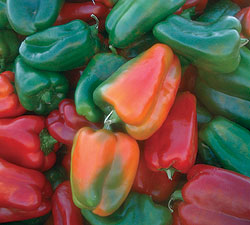
California Wonder Pepper Seeds72 days to harvest. California Wonder Pepper Seeds produce an all time favorite bell pepper, best used fresh in salads or for stuffing. Matures green to red with fruit size 4" x 3.5". Package (100 seeds). |
|
|
|
Vegetable Garden � Tips on Growing Peppers From Seed
Days to Maturity: 55-90GROWING SEEDLINGS:
- Sow Chili Pepper seeds in shallow flats, 4 seeds/in., 1/4" deep, in late February or March or about 8-12 weeks prior to transplanting outdoors.
- If possible, maintain soil temperatures 80-85�F (27-29�C). Pepper seed germinates very slowly in cooler soil, and may very well rot before they germinate.
- Well-drained, fertile soil with abundant amounts of phosphorus, magnesium and calcium is best. Peppers do well without much added nitrogen. They are also more tolerant of acid soil than many other Garden Vegetables. Chili Peppers are less likely than bell or sweet peppers to object to the low level of aeration in heavy clay soils. Just remember to water them well in hot and dry weather.
- When the first true leaves just show, transplant 2-3" apart in flats or 2" cell-type containers.
- The use of 2" or larger cells will produce larger plants with better-developed root systems.
- Harden off the pepper plants one to two weeks before your last frost by setting them outdoors, if the plants have blossoms cover the tomato plants at night until the night temperature is warmer.
- Grow plants at approx. 70�F (21�C) day and 60�F (16�C) nights.
- Do not let people that smoke handle your peppers or pick your peppers before they wash their hands. The virus that causes tobacco mosaic which will affect peppers, survives the cigarette manufacturing processes.
COLD TREATMENT:
- Exposing the seedlings to controlled cold treatments can increase the number of flowers and fruits.
- When the third true leaf appears, grow the plants at a minimum night temp. of 53-55�F (12-13�C) for 4 weeks.
- The plants should receive full sunlight.
TRANSPLANTING:
- Transplant out after frost when the soil is warm and weather is settled.
- Ideal seedlings have buds, but no open flowers.
- When setting out peppers plants I bury them 2 inches deeper than what they were in the pots or trays. Set plants 12-18" apart in rows 24-36" apart, or 2 rows on poly/paper mulch, 18" between plants.
- Water-in transplants using a high phosphorus solution.
- Use Row Covers: Cold weather is buffered and earliness increased by using plastic mulch, especially in combination with a slotted row cover or lightweight fabric row cover supported by wire hoops.
- Remove row covers when in sunny weather above 85�F (29�C) to prevent heat damage.
USDA Hardiness Zone -First Frost Date- Last Frost Date
- Zone 1 -July 15th -June 15th
- Zone 2 -August 15th- May 15th
- Zone 3 -September 15th May 15th
- Zone 4 -September 15th May 15th
- Zone 5 -October 15th April 15th
- Zone 6 -October 15th April 15th
- Zone 7 -October 15th April 15th
- Zone 8 -November 15th March 15th
- Zone 9 -December 15th February 15th
- Zone 10 -December 15th January 31st (sometimes earlier)
- Zone 11 -No frost. No frost.
INSECT PESTS:
Control climbing cutworms with with paper cylinder collars.To prevent bacterial spot and phytopthora, drip irrigate only.
Plant only in well-drained soils, minimize soil compaction.
Follow a 4-year crop rotation.
Sunscald is caused by inadequate foliage. Prevent blossom end rot with adequate soil calcium and regular moisture.
Big bushy plants with few peppers can be caused by an excess of nitrogen, hot or cold temp. Extremes during the flowering period, tarnished plant bug injury, and choice of late, poorly adapted varieties.