

|

|

|

|

|

|

|

|
 Read Our Blog
 Find Us On Facebook
 Follow 2BSeeds On Twitter
Gourmet Sauces, Gluten and MSG-Free - Recipes - Gourmet made easy
Free Tomato Seeds for the Unemployed
Open Pollinated Vegetable Seeds
Vegetable Seeds
· Artichoke Seeds
· Asparagus Seeds
· Brussells Sprouts Seeds
· Bush Bean Seeds
· Bush Wax Bean Seeds
· Beet Seeds
· Broccoli Seeds
· Cabbage Seeds
· Carrot Seeds
· Cauliflower Seeds
· Celery Seeds
· Chard Seeds
· Cherry Tomato Seeds
· Chili Pepper Seeds
· Chinese Cabbage Seeds
· Collard Green Seeds
· Corn Seeds
· Cucumber Seeds
· Edamame Seeds
· Eggplant Seeds
· Endive Seeds
· Gourd Seeds
· Kale Seeds
· Kohlrabi Seeds
· Leeks Seeds
· Lettuce Seeds
· Luffa Seeds
· Melon Seeds
· Mizuna Seeds
· Mustard Green Seeds
· Okra Seeds
· Onion Seeds
· Pak Choy Seeds
· Pea Seeds
· Pepper Seeds
· Perilla Seeds
· Pole Bean Seeds
· Pumpkin Seeds
· Radish Seeds
· Rhubarb Seeds
· Spinach Seeds
· Strawberry Seeds
· Summer Squash Seeds
· Tomatillo Seeds
· Tomato Seeds
· Turnip Seeds
· Watercress Seeds
· Watermelon Seeds
· Winter Squash Seeds
Organic Vegetable Seeds
Container Patio Vegetable Seeds
Annual Flower Seeds
Perennial Flower Seeds
Herb Seeds
Flowers for Bees
Wildflower Seed Mixes
Fuseables Flower Seed Mixes
Seed Collections
Bee's Select Seeds
· Select Flower Seeds
· Select Herb Seeds
· Select Vegetable Seeds
Hummingbird and Butterfly Gardens
Customer Care
· 2B Seeds Home
· About Us
· Contact Us
· Become a Member
· Customer Testimonials
· Our Newsletter
· How to Order
· Check the Status of Your Order
· Zone Map
· Vegetable Seed Sowing Chart
· Starting Fall Crops
· Flower Seeds
· Shipping Info
· Security Policy
· Our Guarantee
· Download Order Form
· Seed Resources & Gardening Information
· 2B Seeds Press
· Sitemap
| Join Our Mailing List |


| You are here: 2B Seeds Home > Vegetable Seeds P-W > Tomato Seeds > Mister Stripy Heirloom Tomato Seeds |
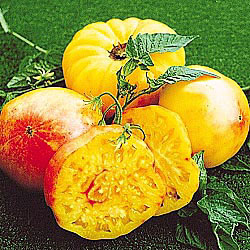
Mister Stripy Heirloom Tomato SeedsA unique heirloom tomato that dates back to the 1800's and was brought here by the Virginian Mennonites from the old country. Vigorous indeterminate vines produce large, 1-3 lb., yellow fruit that have red streaks running throughout them. The fruit are deep oblate in shape and have a rough shoulder. The flavor and color of this variety make it one of the most popular heirlooms available. 56 days to harvest. Indeterminate. 30 seeds per package. |
|
|
|
How to Plant and Grow Tomato Seeds
Planting Depth: 1/4"Soil Temperature for Germ.: 70-90�F
Days to Germ.: 6-10
Plant Spacing: 18"-24"
Days to Maturity: 70-80
Full Sun
Moderate Water
START INDOORS in a warm, well-lighted area 5-7 weeks before last frost. Sow Tomato seeds �" deep in seed starting formula. Keep evenly moist. Tomato seedlings emerge in 5-8 days at 70� F. Prior to transplanting to the garden, accustom to outdoor conditions by moving to a sheltered place outside for a week.
TRANSPLANT seedlings to stand 3-4" apart each way if left unstaked; 2�" apart each way if staked or grown in cages. Tomatoes need full sun and well drained soil. GARDEN HINTS: Water deeply once a week in dry weather. Cultivate or mulch to control weeds. A trick that we learned from a grower of Hydroponic Tomatoes, was in the absence of bees, flick the tomato flower with your index finger lightly, and this will help with the pollination.
The cornerstone crop in home gardens, sun-ripened tomatoes deliver the taste of summer in every bite. Just a few healthy plants will produce buckets of beautiful Tomatoes loaded with flavor and nutrition. Tomatoes run on warmth, so they are best planted in late spring and early summer except in Zone 10, where they are a fall and winter crop. Choosing varieties can be confusing because there are so many, but it�s a good idea to plant some of each for variety and length of season. Devote a prime, sunny spot to tomatoes, which will grow into a tall screen of green foliage studded with ripening fruits in mid- to late summer. Tomatoes need at least 8 hours of sun to bring out their best flavors, and you will need to stake, trellis, or cage the sprawling plants to keep them off the ground. Decide on a support plan before you set out your tomato plants.
Space robust, long-vined, indeterminate varieties about 3 feet apart.
Stocky determinate plants can be grown at tighter 2-foot spacing.
A single patio tomato plant will fill an 18-inch-wide container.
You can combine fast-maturing varieties with special season-stretching techniques to grow an early crop, but wait until the last frost has passed to transplant main-season tomatoes.
Tomatoes take up nutrients best when the soil pH ranges from 6.2 to 6.8, and they need a constant supply of major and minor plant nutrients. To provide the major nutrients, mix a balanced timed-release or organic fertilizer into the soil as you prepare planting holes, following the rates given on the label. At the same time, mix in 3 to 4 inches of compost. The compost will provide minor nutrients and help hold moisture and fertilizer in the soil until it is needed by the plants.
To quickly increase the root mass of tomato plants, we recommend deep planting, so that two-thirds of the plant's stem is buried in moist soil. Cover the ground with 2 to 4 inches of mulch to suppress weeds and keep the soil evenly moist. Straw and shredded leaves make great mulches for tomatoes, or you can use weed-free grass clippings, applied in 1-inch layers every few weeks. Do not apply grass clippings any more thickly or they can mat down and prevent water from passing through. If summer droughts are common in your area, use soaker hoses or other drought-busting techniques to help maintain even soil moisture � the key to preventing cracked fruits and blossom-end rot. For maximum efficiency and eye appeal, place soaker hoses around the plants and cover with mulch.
As summer heats up, some tomatoes have trouble setting fruit. Be patient, and you will start seeing little green tomatoes again when nights begin cooling down. Meanwhile, promptly harvest ripe tomatoes to relieve stressed plants of their heavy burden. If you live in an area where summertime temperatures are typically in the 90s, be sure to choose some varieties bred for their ability to set fruit under high temperatures.
By late summer, plants that began producing early in the season will show signs of exhaustion. It will take but a few minutes to coax out new growth by pruning away withered leaves and branches. Then follow up with liquid fertilizer and treatments for leaf diseases or insects, if needed.
Humid conditions close to the ground create ideal conditions for fungal diseases like early blight, which causes dark spots to form on lower leaves. In mid-summer, big green caterpillars called tomato hornworms eat tomato foliage and sometimes damage fruits as well.
As tomatoes begin to ripen, their color changes from vibrant medium-green to a lighter shade, with faint pink or yellow stripes. These "breakers," or mature green tomatoes, can be chopped into Tomato salsa, pickled, or pan-fried into a crispy appetizer. Yet tomato flavors become much more complex as the fruits ripen, so you have good reason to wait. The exact signs of ripeness vary with variety, but in general, perfectly ripe tomatoes show deep color yet still feel firm when gently squeezed. Store picked tomatoes at room temperature indoors, or in a shady place outside. Never refrigerate tomatoes, because temperatures below 55� cause the precious flavor compounds to break down. Bumper crops can be frozen, canned, or dried for future use.