

|

|

|

|

|

|

|

|
 Read Our Blog
 Find Us On Facebook
 Follow 2BSeeds On Twitter
Gourmet Sauces, Gluten and MSG-Free - Recipes - Gourmet made easy
Free Tomato Seeds for the Unemployed
Open Pollinated Vegetable Seeds
Annual Flower Seeds
· Ageratum Seeds
· Alyssum Seeds
· Amaranthus Seeds
· Aster Seeds
· Baby's Breath Seeds
· Bachelor's Button Seeds
· Balsam Seeds
· Bells of Ireland Seeds
· Black Eyed Susan Seeds
· Calendula Seeds
· Campanula Seeds
· Carnation Seeds
· Celosia Seeds
· Cleome Seeds
· Coleus Seeds
· Cosmos Seeds
· Dahlberg Daisy Seeds
· Dahlia Seeds
· Dianthus Seeds
· Dusty Miller Seeds
· Eragrostis Seeds
· English Wallflower Seeds
· Forget-Me-Not Seeds
· Four O'Clocks Seeds
· Gazania Seeds
· Geranium Seeds
· Godetia Seeds
· Gomphrena Seeds
· Helichrysum Seeds
· Hollyhock Seeds
· Hyacinth Bean Vine Seeds
· Impatiens Seeds
· Iresine Seeds
· Isolepis Seeds
· Lavatera Seeds
· Lobelia Seeds
· Marigold Seeds
· Millet Seeds
· Mimulus Seeds
· Moonflower Seeds
· Morning Glory Seeds
· Nasturtium Seeds
· Nemesia Seeds
· Nicotiana Seeds
· Nierembergia Seeds
· Nigella Seeds
· Orchid Flower Seeds
· Ornamental Kale Seeds
· Ornamental Pepper Seeds
· Osteospermum Seeds
· Pansy Seeds
· Pentas Seeds
· Petunia Seeds
· Phlox Seeds
· Poached Egg Plant Seeds
· Pocketbook Plant Seeds
· Poppy Seeds
· Portulaca Seeds
· Ptilotus Seeds
· Rudbeckia Seeds
· Salvia Seeds
· Snapdragon Seeds
· Statice Seeds
· Stock Seeds
· Sunflower Seeds
· Sweet Pea Seeds
· Tithonia Seeds
· Torenia Seeds
· Verbena Seeds
· Vinca Seeds
· Viola Seeds
· Zinnia Seeds
Perennial Flower Seeds
Organic Vegetable Seeds
Vegetable Seeds
Container Patio Vegetable Seeds
Herb Seeds
Flowers for Bees
Wildflower Seed Mixes
Fuseables Flower Seed Mixes
Seed Collections
Bee's Select Seeds
· Select Flower Seeds
· Select Herb Seeds
· Select Vegetable Seeds
Hummingbird and Butterfly Gardens
Customer Care
· 2B Seeds Home
· About Us
· Contact Us
· Become a Member
· Customer Testimonials
· Our Newsletter
· How to Order
· Check the Status of Your Order
· Zone Map
· Vegetable Seed Sowing Chart
· Starting Fall Crops
· Flower Seeds
· Shipping Info
· Security Policy
· Our Guarantee
· Download Order Form
· Seed Resources & Gardening Information
· 2B Seeds Press
· Sitemap
| Join Our Mailing List |


| You are here: 2B Seeds Home > Annual Flower Seeds R-Z > Vinca Seeds > Cooler Coconut Vinca Seeds |
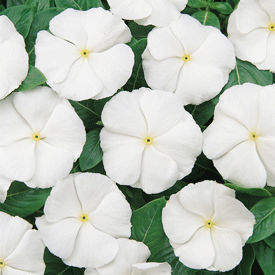
Cooler Coconut Vinca SeedsA terrific performer in hot, dry conditions. A perfect fit for garden beds, landscapes and containers. This variety has large over-lapping flower petals with a pure white color on a 10-14" tall plant. Package (50 seeds). |
|
|
|
Flower Garden � Tips on Growing Vinca From Seed
Germination:
- Media
- Use a well-drained, disease-free, soil less medium with a pH of 5.8 to 6.0 and a medium initial nutrient charge.
Sowing:
- Cover the seed lightly with vermiculite. Allow 3 to 5 days for germination.
Stage 1 = Radicle
- Germination takes 3 to 5 days.
- Soil Temperature: 75 to 78�F (24 to 25�C)
- Light: Not required
- Moisture: Keep soil wet (level 4) during Stage 1.
- Humidity: Maintain 95% relative humidity (RH) until the cotyledons emerge.
Stage 2 = Hypocotyl ( First Leaves)
- Soil temperature: 70 to 72�F (21 to 22�C)
- Light: Up to 2,500 f.c.
- Moisture: Reduce soil moisture slightly (level 3 to 4) to allow the roots to penetrate into the media.
- Fertilizer: Apply fertilizer at rate 1 (less than 100 ppm N/less than 0.7 mS/cm EC) from nitrate-form fertilizers with low phosphorous.
Stage 3 = Cotyledon ( True Leaves)
- Soil temperature: 70 to 72�F (21 to 22�C)
- Light: High light is required for Vinca, as they will stretch and become leggy.
- Moisture: Allow media to dry further until the surface becomes light brown (level 2) before watering. Keep the moisture to wet-dry cycle (moisture level 4 to 2).
- Fertilizer: Increase fertilizer to rate 2 (100 to 175 ppm N/0.7 to 1.2 mS/cm EC). Maintain medium pH of 5.8 to 6.0 and EC between 1.0 and 1.5 mS/cm.
Stage 4 = (Leaf expansion)
- Soil temperature: 70 to 72�F (21 to 22�C)
- Light: Higher Light is necessary to stop the plant from looking for light-or will stretch and if temperature can be controlled.
- Moisture: Same as Stage 3 .
- Fertilizer: Same as Stage 3.
- Growth Regulators: Not needed.
Growing On to Finish
- Nights: 65 to 68�F (18 to 20�C)
- Days: 75�F (24�C) or above
- As high as possible while maintaining optimal production temperatures.
- Maintain even moisture. Avoid excessive media and foliage wetness as these conditions are favorable for disease incidence.
Temperature
Light
Irrigation
USDA Hardiness Zone -First Frost Date- Last Frost Date
- Zone 1 -July 15th -June 15th
- Zone 2 -August 15th- May 15th
- Zone 3 -September 15th May 15th
- Zone 4 -September 15th May 15th
- Zone 5 -October 15th April 15th
- Zone 6 -October 15th April 15th
- Zone 7 -October 15th April 15th
- Zone 8 -November 15th March 15th
- Zone 9 -December 15th February 15th
- Zone 10 -December 15th January 31st (sometimes earlier)
- Zone 11 _No frost. No frost.
- EC=Electrical Conductivity
- FC=Foot Candles
- PPM=Parts Per Million
- Add 4 ounces of hydrated lime per square yard in sandy soils
- Add 8 ounces of hydrated lime per square yard in loamy soils
- Add 12 ounces of hydrated lime per square yard in clay soils
- Add 25 ounces of hydrated lime per square yard in peaty soils
- The addition of ash, bone meal, or crushed oyster shells will also help to raise soil pH levels.
- Mix in 1.2 oz of ground rock sulfur per square yard if the soil is sandy
- Mix in 3.6 oz per square yard for all other soils.
- Composted leaves, wood chips, sawdust, leaf mold and peat moss, will also help to lower the soil pH.
Terms and their meaning:
Plant injury resulting from excessive soluble salts may first occur as a mild chlorosis of the foliage, later progressing to a necrosis of leaf tips and margins. This type of injury is largely attributed to the mobility of soluble salts within the plant. As these salts are rapidly translocated throughout the plant, they accumulate at the leaf tips and margins. Once the salts reach a toxic level they cause the characteristic "burn" associated with excessive salts. For an accurate reading get an EC meter. Soluble salts in irrigation water are measured in terms of electrical conductivity (EC). The higher the salt content the greater the EC. In general EC values exceeding 2.0 are considered toxic to plant growth. Monitor your water quality frequently in order to avoid potential problems from soluble salts.
Light intensity is a primary factor in the photosynthesis of all plants. Full unobstructed sunlight has an intensity of about 10,000 fc. Where as an overcast day will produce an intensity of around 1,000 fc. A window sill or light around a window or patio glass door can range from 100 to 5,000 depending of course what direction the light source is facing, or the time of year and your latitude.
This unit of measure is relatively unique to the greenhouse industry and often there is some confusion on how ppm is calculated.
I. To calculate the ppm contained in 1 ounce of material first solve for B:
A x 75 = B
A = the % active ingredient (AI) in the fertilizer
B = ppm contained in 1 ounce of the material in 100 gallons of water
Example: Calcium nitrate contains 15% N (0.15 x 75 = 11.25). If 1 ounce of calcium nitrate is dissolved in 100 gallons of water the solution will contain a II. To calculate the number of ounces of material required to make up a desired ppm concentration solve for C:
C = Desired ppm conc. / B
B = ppm contained in 1 ounce of the material in 100 gallons of water (from above).
C = number of ounces of material to add to 100 gallons of water to achieve the desired concentration.
Example: To make up a 250 ppm solution of calcium nitrate first multiply the AI x 75 (.15 x 75 = 11.25). Next divide the desired concentration by 11.25 (250/11.25 = 22). To make up a 250 ppm solution of calcium nitrate you would add 22 ounces to 100 gallons of water.
aproximately 11.25 ppm N.
To Measure Soil pH
It is recommended that you use a relatively inexpensive, and follow the manufacturers instructions when testing the pH Level of your Gardens soil. To raise or lower the pH level in the soil either Limestone or Sulfur is utilized. Other materials will accomplish the same results; however the two that are listed are the most commonly used.Limestone is added to the soil to raise the pH level because limestone is essentially calcium and calcium reacts with water in the soil to yield hydroxyl ions .. a process known as, hydrolysis = thus the pH level in the soil is raised.
Sulfur reacts with bacteria in the soil and produces sulfuric acid, which releases hydrogen ions thus causing the soil to become more acidic =the pH level is lowered.