

|

|

|

|

|

|

|

|
 Read Our Blog
 Find Us On Facebook
 Follow 2BSeeds On Twitter
Gourmet Sauces, Gluten and MSG-Free - Recipes - Gourmet made easy
Free Tomato Seeds for the Unemployed
Open Pollinated Vegetable Seeds
Annual Flower Seeds
· Ageratum Seeds
· Alyssum Seeds
· Amaranthus Seeds
· Aster Seeds
· Baby's Breath Seeds
· Bachelor's Button Seeds
· Balsam Seeds
· Bells of Ireland Seeds
· Black Eyed Susan Seeds
· Calendula Seeds
· Campanula Seeds
· Carnation Seeds
· Celosia Seeds
· Cleome Seeds
· Coleus Seeds
· Cosmos Seeds
· Dahlberg Daisy Seeds
· Dahlia Seeds
· Dianthus Seeds
· Dusty Miller Seeds
· Eragrostis Seeds
· English Wallflower Seeds
· Forget-Me-Not Seeds
· Four O'Clocks Seeds
· Gazania Seeds
· Geranium Seeds
· Godetia Seeds
· Gomphrena Seeds
· Helichrysum Seeds
· Hollyhock Seeds
· Hyacinth Bean Vine Seeds
· Impatiens Seeds
· Iresine Seeds
· Isolepis Seeds
· Lavatera Seeds
· Lobelia Seeds
· Marigold Seeds
· Millet Seeds
· Mimulus Seeds
· Moonflower Seeds
· Morning Glory Seeds
· Nasturtium Seeds
· Nemesia Seeds
· Nicotiana Seeds
· Nierembergia Seeds
· Nigella Seeds
· Orchid Flower Seeds
· Ornamental Kale Seeds
· Ornamental Pepper Seeds
· Osteospermum Seeds
· Pansy Seeds
· Pentas Seeds
· Petunia Seeds
· Phlox Seeds
· Poached Egg Plant Seeds
· Pocketbook Plant Seeds
· Poppy Seeds
· Portulaca Seeds
· Ptilotus Seeds
· Rudbeckia Seeds
· Salvia Seeds
· Snapdragon Seeds
· Statice Seeds
· Stock Seeds
· Sunflower Seeds
· Sweet Pea Seeds
· Tithonia Seeds
· Torenia Seeds
· Verbena Seeds
· Vinca Seeds
· Viola Seeds
· Zinnia Seeds
Perennial Flower Seeds
Organic Vegetable Seeds
Vegetable Seeds
Container Patio Vegetable Seeds
Herb Seeds
Flowers for Bees
Wildflower Seed Mixes
Fuseables Flower Seed Mixes
Seed Collections
Bee's Select Seeds
· Select Flower Seeds
· Select Herb Seeds
· Select Vegetable Seeds
Hummingbird and Butterfly Gardens
Customer Care
· 2B Seeds Home
· About Us
· Contact Us
· Become a Member
· Customer Testimonials
· Our Newsletter
· How to Order
· Check the Status of Your Order
· Zone Map
· Vegetable Seed Sowing Chart
· Starting Fall Crops
· Flower Seeds
· Shipping Info
· Security Policy
· Our Guarantee
· Download Order Form
· Seed Resources & Gardening Information
· 2B Seeds Press
· Sitemap
| Join Our Mailing List |


| You are here: 2B Seeds Home > Annual Flower Seeds M-P > Petunia Seeds > Sophistica Lime Bi-Color F1 Petunia Seeds |
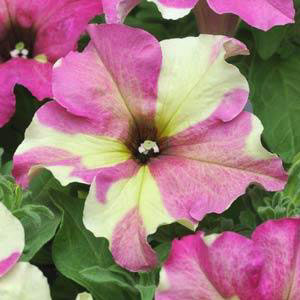
Sophistica Lime Bi-Color F1 Petunia SeedsPetunia x hybridaNEW! You can certainly make a fashion statement from these Designer Collection Petunias. Not only are they unique in colors and patterns they offer a chic years fashion trend. They have dense foliage with masses of fragrant 2-3" blooms from summer until frost and with the added pleasure of not having to deadhead or pinch. Easy to grow and extremely vigorous that can withstand the rain. Add this to your plantings with lightly ruffled vibrant bi-color petunia, with its unusual lime background and striking magenta color to make a statement. Upright and mounding habit on a plant height of 10-15" with a 10-12" spread. Attracts Butterflies. 10 Pelleted Seeds. |
|
|
|
Tips on How to Grow Petunias
Time Frame when plants are receptive to flower initiation: Days 14 � 21; 3 � 4 leaves.Flowering Type: Long Day Plant � long days required for flowering.
Specific Flowering Mechanism: Flowering is affected by day length, irradiance and temperature.
Germination � Optimum conditions for seedling development that begins the day the crop is sown until cotyledon expansion.
Expect radicle emergence in 3 � 5 days.
Cover: Do not cover the seeds.
Media: � pH: 5.5 � 5.8
Light: Light is necessary for germination. Provide a light source of 10 � 100
foot candles (100 � 1000 lux) if utilizing a chamber.
Moisture: Saturated (5) for days 1 � 3. On days 4 � 6 reduce moisture to
wet (4). Reduce further beginning day 7 to medium
Humidity: 100% until radicle emergence then reduce to 40%.
Dehumidify: Provide horizontal airflow to aid in drying down the media
through evapotranspiration, allowing better penetration of oxygen to the roots.
Temperature: 72� � 76�F (22� � 24�C) until radicle emergence. Gradually
reduce to 62� � 65�F (16� � 19�C) as cotyledons expand.
Finish Bulking/Flower Initiation � Optimum conditions during the vegetative
period, beginning at transplant, needed for the root to reach the edge of the container;
AND to make the plant receptive to flower initiation.
Media: pH: 5.5 � 5.8 Yellow upper leaves may indicate iron deficiencies
when pH is > 6.6.
Light: Petunias need long days to flower. To initiate bud under short days,
extend day length to 13 hours. Under long day, low light conditions, supplemental
lighting of 350 � 500 foot candles (3500 � 5000 lux) may be necessary.
Temperature: After transplant, Petunias require temperatures > 55�F (13�C)
nights for the first 6 weeks to initiate flower bud development.
After bud set, the
night temperatures can be lowered to 50�F (10�C) to encourage basal branching
and compactness.
However, lower temperatures may also substantially
decrease the number of flowers initiated. Downward cupping of leaves may
indicate too cool temperatures in combination with overwatering.
Average Daily Temperature (ADT): 67�F (19�C)
Moisture: Alternate between moisture levels wet and dry Allow media
to dry before re-saturating to level .
Dehumidify: Provide horizontal airflow to aid in drying down the media
through evapotranspiration under cool, low light conditions.
Fertilizers: Under high light conditions, apply an ammonium-based feed (17-5-
17). Under low light conditions, apply a calcium-based feed (14-4-14). Under
high light and long or extended days, an ammonium-based feed (20-10-20) is
preferred. To prevent stretching under low light and cool temperatures,
reduce ammonium and apply only calcium-based fertilizer.
Light: Full sun
USDA Hardiness Zone: 8
Pick Your Type of Petunia
Today's petunias offer enormous variety: single and double blooms, ruffled or smooth petals, striped, veined or solid colors, mounding and cascading habits and even some with fragrance. Most of the petunias sold today are hybrids, developed for specific design purposes. It's hard to go wrong choosing a petunia these days, but here's some advice for choosing your petunia needs.
Grandifloras
Grandifloras are one of the oldest varieties. These petunias grow eight to twelve inches high and have the large (4-5"), wavy-edged blossoms that petunias first became known for. They
can be single or double. Grandiflor petunias have the largest flowers, but the flowers get pummeled by rain and are unpleasant to deadhead. However some of them, like 'Prism Sunsine' are stunning. Grandifloras work well in both beds and containers.
Multiflora
Multiflora petunias have a more compact growth habit than grandifloras. The flowers are smaller (2"), but more prolific and they hold up better against rain. There is also a wide range of colors. Multiflora petunias are a better choice for garden beds and also work well in containers.
Hybrids of grandiflora and multiflora petunias often share qualities.
Milliflora
And now for something completely different! Whereas plant breeding is often aimed at producing bigger and better plants bearing bigger and better flowers, this new variety has concentrated on the reverse. At little more than a third the size of your average Petunia plant, this quite charming plant makes up - if that were necessary - for lack of stature by covering itself with countless flowers, each about 1� ins. across, all summer long. These delightful flowers, without doubt Petunias, are just charming, scaled-down versions of their more usual relatives but still manage to conceal the foliage beneath their abundance.
Spreading
The Spreading types created quite a stir when first introduced and keeps improving. 'These petunias grow only 6" tall but can spread to 4' wide. They make wonderful groundcovers and trailers for containers. Although Spreading petunias do not need deadheading, they do wear out in the hottest part of the summer and some pruning will revive them.