

|

|

|

|

|

|

|

|
 Read Our Blog
 Find Us On Facebook
 Follow 2BSeeds On Twitter
Gourmet Sauces, Gluten and MSG-Free - Recipes - Gourmet made easy
Free Tomato Seeds for the Unemployed
Open Pollinated Vegetable Seeds
Bee's Select Flower Seeds
· Blue Ageratum Seeds
· White Alyssum Seeds
· Red Celosia Seeds
· Yellow Celosia Seeds
· Rose Coleus Seeds
· Cosmos Mix Seeds
· Cherry Dianthus Seeds
· Dianthus Mix Seeds
· Gazania Mix Seeds
· Impatiens Mix Seeds
· Violet Impatiens Seeds
· White Impatiens Seeds
· Trailing Mix Lobelia Seeds
· Yellow Red Marigold Seeds
· Single Mix Marigold Seeds
· Orange Marigold Seeds
· Large Yellow Marigold Seeds
· Marigold Mix Seeds
· Blue Morning Glory Seeds
· White Morning Glory Seeds
· Nicotiana Seeds
· Pansy Mix Seeds
· Light Blue Pansy Seeds
· Light Fruit Pansy Seeds
· White Petunia Seeds
· Blue Petunia Seeds
· Red Petunia Seeds
· Purple Petunia Seeds
· Rose Petunia Seeds
· Poppy Mix Seeds
· Moss Rose Mix Seeds
· Red Salvia Seeds
· Salvia Mix Seeds
· Blue Salvia Seeds
· Short Snapdragon Seeds
· Medium Snapdragon Seeds
· Tall Snapdragon Seeds
· Stock Mix Seeds
· Tall Yellow Sunflower Seeds
· Edible Sunflower Seeds
· Bi-Color Sunflower Seeds
· Short Yellow Sunflower Seeds
· Verbena Mix Seeds
· Vinca Mix Seeds
· Red Vinca Seeds
· Old Fashioned Viola Seeds
· Lilac Yellow Viola Seeds
· Primrose Viola Seeds
· Tall Yellow Zinnia Seeds
· Tall Red Zinnia Seeds
· Tall Purple Zinnia Seeds
· Zinnia Short Mix Seeds
· Zinnia Tall Mix Seeds
Annual Flower Seeds
Perennial Flower Seeds
Organic Vegetable Seeds
Vegetable Seeds
Container Patio Vegetable Seeds
Herb Seeds
Flowers for Bees
Wildflower Seed Mixes
Fuseables Flower Seed Mixes
Seed Collections
Bee's Select Seeds
· Select Flower Seeds
· Select Herb Seeds
· Select Vegetable Seeds
Hummingbird and Butterfly Gardens
Customer Care
· 2B Seeds Home
· About Us
· Contact Us
· Become a Member
· Customer Testimonials
· Our Newsletter
· How to Order
· Check the Status of Your Order
· Zone Map
· Vegetable Seed Sowing Chart
· Starting Fall Crops
· Flower Seeds
· Shipping Info
· Security Policy
· Our Guarantee
· Download Order Form
· Seed Resources & Gardening Information
· 2B Seeds Press
· Sitemap
| Join Our Mailing List |


| You are here: 2B Seeds Home > Select Flower Seeds R-S > Tall Mix Snapdragon Select Seeds |
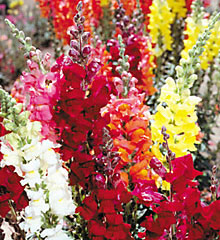
Tall Mix Snapdragon Select SeedsOur Tall Mix Snapdragon Select Seeds are the best choice for a cut snapdragon. You can expect success from these carefuly selected Tall Mix Snapdragon Select seeds. These vigorous, strong absolute winners have been chosen to meet your highest expectations. They have been tested nation-wide for great garden performance in all parts of our country. |
|
|
|
How To Grow Snapdragons From Seeds
Germination
- Stage 1: Time of radical emergence.
- Use a well-drained, disease-free seedling medium with a pH of 5.5 to 5.8
- Germination: 64 to 68�F (18 to 20�C)
- Timing: 4 to 8 days
- Soil temperature: 64 to 68�F (18 to 20�C)
- Moisture: Medium
- Light: Not required
- Cover: Lightly with vermiculite
Plug Production
- Stage 2: Stem and cotyledons emerge.
- Timing: 7 to 14 days
- Soil temperature: 65 to 70�F (18 to 21�C)
- Moisture: Reduce moisture levels once radicle emergence occurs. Allow the soil to dry out slightly before watering. Irrigate early in the day so that foliage is dry by nightfall.
- Light: 450 to 1,500 f.c.
- Fertilizer: 50 to 75 ppm N from 14-0-14 or calcium/ potassium nitrate feed once per week when cotyledons are fully expanded. Alternate feed with clear water. Maintain water alkalinity at 60-100 ppm and ammonium levels at less than 10 ppm.
- Soil pH: 5.5 to 5.8
Stage 3:
Growth and development of true leaves.- Timing: 14 days
- Soil temperature: 62 to 65�F (17 to 18�C)
- Moisture: To promote root growth and control shoot growth, allow the soil to dry between irrigations, but avoid wilting.
- Light: 1,000 to 2,500 f.c.
- Fertilizer: 100 to 150 ppm of 20-10-20 alternating with 14-0-14 or other calcium/potassium nitrate fertilizer, every two or three irrigations. Supplement with magnesium one to two times during this stage using magnesuium sulfate (16 oz./100 gal.) or magnesium nitrate. Do not mix magnesium sulfate with calcium nitrate as precipitate will form.
- Soil pH: 5.5 to 5.8
Stage 4:
Plants are ready for transplanting.- Timing: 7 days
- Soil temperature: 60 to 62�F (16 to 19�C)
- Moisture: Allow soil to dry thoroughly between irrigations, but avoid wilting.
- Light: 1,000 to 2,500 f.c.
- Fertilizer: 100 to 150 ppm N from 14-0-14 or calcium/ potassium nitrate feed as needed. Avoid ammonium fertilizers in Stage 4.
- Soil pH: 5.5 to 5.8
Growing On to Finish-In Greenhouse or Outdoors
Use a well-drained disease-free soil less medium with a medium initial nutrient charge and a pH of 5.5 to 6.2.- Temperature: 45 to 55�F (10 to 13�C) nights and 55 to 70�F (13 to 22�C) days. Avoid night temperatures above 55�F (13�C) as this will reduce stem strength.
- The best time to grow Snapdragons is Autumn through early Spring, when cooler growing conditions can be maintained.
- Moisture: Allow soil to dry slightly between waterings, but avoid wilting.
- Light: Keep light levels as high as possible while maintaining recommended temperature.
- Fertilizer: Every other irrigation, apply 150 ppm N from 15-0-15, alternating with 20-10-20. Alternate feed with clear water.
- Soil pH: 5.5 to 6.2
Controlling Height:
Once plants are rooted to the sides of the containers they can be allowed to dry slightly prior to irrigation.Withhold fertilizer, especially phosphorous and ammonium-form N.
Snapdragons are responsive to day/night temperature differential (DIF) and are shorter with a negative DIF.