

|

|

|

|

|

|

|

|
 Read Our Blog
 Find Us On Facebook
 Follow 2BSeeds On Twitter
Gourmet Sauces, Gluten and MSG-Free - Recipes - Gourmet made easy
Free Tomato Seeds for the Unemployed
Open Pollinated Vegetable Seeds
Annual Flower Seeds
· Ageratum Seeds
· Alyssum Seeds
· Amaranthus Seeds
· Aster Seeds
· Baby's Breath Seeds
· Bachelor's Button Seeds
· Balsam Seeds
· Bells of Ireland Seeds
· Black Eyed Susan Seeds
· Calendula Seeds
· Campanula Seeds
· Carnation Seeds
· Celosia Seeds
· Cleome Seeds
· Coleus Seeds
· Cosmos Seeds
· Dahlberg Daisy Seeds
· Dahlia Seeds
· Dianthus Seeds
· Dusty Miller Seeds
· Eragrostis Seeds
· English Wallflower Seeds
· Forget-Me-Not Seeds
· Four O'Clocks Seeds
· Gazania Seeds
· Geranium Seeds
· Godetia Seeds
· Gomphrena Seeds
· Helichrysum Seeds
· Hollyhock Seeds
· Hyacinth Bean Vine Seeds
· Impatiens Seeds
· Iresine Seeds
· Isolepis Seeds
· Lavatera Seeds
· Lobelia Seeds
· Marigold Seeds
· Millet Seeds
· Mimulus Seeds
· Moonflower Seeds
· Morning Glory Seeds
· Nasturtium Seeds
· Nemesia Seeds
· Nicotiana Seeds
· Nierembergia Seeds
· Nigella Seeds
· Orchid Flower Seeds
· Ornamental Kale Seeds
· Ornamental Pepper Seeds
· Osteospermum Seeds
· Pansy Seeds
· Pentas Seeds
· Petunia Seeds
· Phlox Seeds
· Poached Egg Plant Seeds
· Pocketbook Plant Seeds
· Poppy Seeds
· Portulaca Seeds
· Ptilotus Seeds
· Rudbeckia Seeds
· Salvia Seeds
· Snapdragon Seeds
· Statice Seeds
· Stock Seeds
· Sunflower Seeds
· Sweet Pea Seeds
· Tithonia Seeds
· Torenia Seeds
· Verbena Seeds
· Vinca Seeds
· Viola Seeds
· Zinnia Seeds
Perennial Flower Seeds
Organic Vegetable Seeds
Vegetable Seeds
Container Patio Vegetable Seeds
Herb Seeds
Flowers for Bees
Wildflower Seed Mixes
Fuseables Flower Seed Mixes
Seed Collections
Bee's Select Seeds
· Select Flower Seeds
· Select Herb Seeds
· Select Vegetable Seeds
Hummingbird and Butterfly Gardens
Customer Care
· 2B Seeds Home
· About Us
· Contact Us
· Become a Member
· Customer Testimonials
· Our Newsletter
· How to Order
· Check the Status of Your Order
· Zone Map
· Vegetable Seed Sowing Chart
· Starting Fall Crops
· Flower Seeds
· Shipping Info
· Security Policy
· Our Guarantee
· Download Order Form
· Seed Resources & Gardening Information
· 2B Seeds Press
· Sitemap
| Join Our Mailing List |


| Annuals | | | Perennials | | | Vegetables | | | Herbs | | | New 2010 Seeds | | | Catalog |
| You are here: 2B Seeds Home > Annual Flower Seeds M-P > Poached Egg Plant Seeds > Poached Egg Plant Seeds |
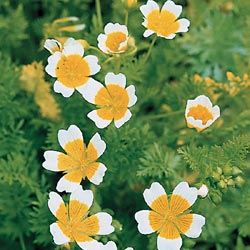
Poached Egg Plant Seeds (Limnanthus)Native to the American West, the Poached-Egg Plant is just 6-12 inches tall and 6 inches wide, yet is sweetly fragrant, a magnet for butterflies and bees, and terrifically floriferous over a long summer-to-fall season. Find a sunny spot for this annual, which delights with ferny divided foliage and bright yellow-and-white blooms -- held in a shallow cup shape -- on slender stems. It is delightful in containers of all kinds, large planting at the front of the border or bed, where it can share its fragrance with less-fortunate plants! It makes a nice foreground planting to everything from dwarf Zinnia to long-blooming perennial. Package (50 seeds). |
|
|
|
How To Grow Poached Egg Plant From Seed-Limnanthes
Because it's a native plant, expect great resistance to weather, poor soil, and other hardships that slow down "imports"! Limnanthes is easy to grow, and makes an exceptionally nice edging along walkways. It will self-seed very freely, so you may want it in a meadowland or informal setting where it can pop up unexpectedly next spring.
- It is hardy to zone 5 and is not frost tender.
- It will flower from May to August, and the seeds ripen from July to August.
- Poached Egg Plant prefers light (sandy), medium (loamy) and heavy (clay) soils and requires well-drained soil.
- The plant prefers acid, neutral and basic (alkaline) soils.
- It cannot grow in the shade.
- It requires moist soil.
- Poached Egg Seedlings are hermaphrodite (have both male and female organs) and are pollinated by bees.
- Sow seed in fall or spring where you want it to grow.
- The location needs to be moist, or at least an area you can water regularly so it doesn't dry out.
- In it's native habitat poached egg flowers are located near streams and other moist areas.
- Light is needed for good germination, so cover ever so lightly with a small amount of sand or soil, and keep moist.
- You may need to protect the seeds from birds with screen or other mesh.
- The plants will have a spread of about 8 inches.
- They also need full sun, and reseed easily. If you are worried about too many seeds, just deadhead most of the plants and leave a few to seed. It is one of those plants that need sun, but yet it needs cool roots. Poached egg flowers bloom 8-10 weeks from sowing.