

|

|

|

|

|

|

|

|
 Read Our Blog
 Find Us On Facebook
 Follow 2BSeeds On Twitter
Gourmet Sauces, Gluten and MSG-Free - Recipes - Gourmet made easy
Free Tomato Seeds for the Unemployed
Open Pollinated Vegetable Seeds
Organic Vegetable Seeds
· Organic Artichoke Seeds
· Organic Arugula Seeds
· Organic Basil Seeds
· Organic Bush Bean Seeds
· Organic Beet Seeds
· Organic Broccoli Seeds
· Organic Cabbage Seeds
· Organic Carrot Seeds
· Organic Cauliflower Seeds
· Organic Celery Seeds
· Organic Chard Seeds
· Organic Chives Seeds
· Organic Corn Seeds
· Organic Cucumber Seeds
· Organic Dill Seeds
· Organic Eggplant Seeds
· Organic Epazote Seeds
· Organic Fennel Seeds
· Organic Kale Seeds
· Organic Leek Seeds
· Organic Lettuce Seeds
· Organic Marjoram Seeds
· Organic Melon Seeds
· Organic Okra Seeds
· Organic Onion Seeds
· Organic Pea Seeds
· Organic Pepper Seeds
· Organic Radish Seeds
· Organic Sage Seeds
· Organic Spinach Seeds
· Organic Squash Seeds, Summer
· Organic Squash Seeds, Winter
· Organic Stevia Seeds
· Organic Thyme Seeds
· Organic Tomatillo Seeds
· Organic Tomato Seeds
· Organic Watermelon Seeds
All Vegetable Seeds
Container Patio Vegetable Seeds
Annual Flower Seeds
Perennial Flower Seeds
Herb Seeds
Flowers for Bees
Wildflower Seed Mixes
Fuseables Flower Seed Mixes
Seed Collections
Bee's Select Seeds
· Select Flower Seeds
· Select Herb Seeds
· Select Vegetable Seeds
Hummingbird and Butterfly Gardens
Customer Care
· 2B Seeds Home
· About Us
· Contact Us
· Become a Member
· Customer Testimonials
· Our Newsletter
· How to Order
· Check the Status of Your Order
· Zone Map
· Vegetable Seed Sowing Chart
· Starting Fall Crops
· Flower Seeds
· Shipping Info
· Security Policy
· Our Guarantee
· Download Order Form
· Seed Resources & Gardening Information
· 2B Seeds Press
· Sitemap
| Join Our Mailing List |


| You are here: 2B Seeds Home > Organic Vegetable Seeds > Organic Beet Seeds, Aviv Dark Red |
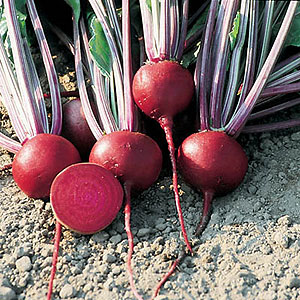
Organic Beet Seeds, Aviv Dark Red -Detroit Dark Red TypeBeta vulgarisThis is the true classic, producing a smooth, globe-shaped, deep red 2 - 4" organic beet that has large, full savoyed tops with deep red petioles. This beet has been rated the highest for flavor. This variety is a good one for late sowings and for winter storage. 63 days to harvest. Grown Organically. 250 seeds per pkg. |
|
|
|
Vegetable Garden - Tips on Growing Beet Seeds
Days to Maturity 55-80Garden Friends:
Bush Beans, cabbage family, corn, leek, lettuce, lima bean, onion and radish.Garden Adversaries:
Mustard and Pole Beans.- Beet seeds need to be well tucked in, as they often fail to germinate if not sufficiently in close contact with the soil. One way to accomplish this is to cover the seed with �� of soil, then step on the soil if it is sandy in type of soil. For heavier clay types tamp the row with the flat blade of your gardening hoe after planting the seeds.
- The beet seed that you plant is actually a seed ball, an aggregate of two to six individual seeds. However even when you follow the recommended spacing of 4 inches apart, the seedlings will still need to be thinned.
- Plant seeds in the garden about a month before your last frost.
- By planting the Beet seeds to early the seeds or seedlings will suffer from freezing.
- In the far north for instance, beet seeds that are planted before they should be may bolt when the weather turns warm.
- If you want an extra early crop start the beet seeds in a greenhouse lets say March 1st for mid-April transplant.
- If you have rabbits in your area, you can cover with a length of wire fencing bent into a U shape over the plants, this will keep the rabbits from eating the green tops.
- Beet seeds are notorious for spotty germination. Naturally their coats contain a germination inhibitor, as well as the seed covering that is to protect the seedling from harmful bacteria found in soils.
- Some gardeners find that if they slightly crush the seed with a rolling pin that this will help with a complete germination .
- Sow seeds outdoors beginning two or three weeks before the last expected frost.
- Seeds should be � to 1 inches deep and 4 inches apart, with at least 1-2 feet between the rows.
- Thin plants when they are 2 inches tall, and be ruthless: Crowded roots will not develop properly. Space 4 inches between plants of smaller varieties, and 6 inches between those with larger roots.
- Your thinnings may be transplanted which provides in effect a succession crop, because with the root insult this will set them back about 2 weeks.
- Some that grow beets say that they nip off the long thready tip of the beet root when they transplant. Also at this time they cut off the outer leaves to balance the root and top growth.
- Give plants at least 1 inch of water a week, and maintain a regular schedule; uneven watering can result in dry, cracked roots. As water will give you the sweet beets that you have been waiting for. Once plants are established, mulch with compost to conserve moisture and deter weeds.
- Encourage rapid growth as a key, along with even moisture, to sweet-flavored beets by feeding.
USDA Hardiness Zone -First Frost Date- Last Frost Date
- Zone 1 -July 15th -June 15th
- Zone 2 -August 15th- May 15th
- Zone 3 -September 15th May 15th
- Zone 4 -September 15th May 15th
- Zone 5 -October 15th April 15th
- Zone 6 -October 15th April 15th
- Zone 7 -October 15th April 15th
- Zone 8 -November 15th March 15th
- Zone 9 -December 15th February 15th
- Zone 10 -December 15th January 31st (sometimes earlier)
- Zone 11 -No frost. No frost.