

|

|

|

|

|

|

|

|
 Read Our Blog
 Find Us On Facebook
 Follow 2BSeeds On Twitter
Gourmet Sauces, Gluten and MSG-Free - Recipes - Gourmet made easy
Free Tomato Seeds for the Unemployed
Open Pollinated Vegetable Seeds
Annual Flower Seeds
· Ageratum Seeds
· Alyssum Seeds
· Amaranthus Seeds
· Aster Seeds
· Baby's Breath Seeds
· Bachelor's Button Seeds
· Balsam Seeds
· Bells of Ireland Seeds
· Black Eyed Susan Seeds
· Calendula Seeds
· Campanula Seeds
· Carnation Seeds
· Celosia Seeds
· Cleome Seeds
· Coleus Seeds
· Cosmos Seeds
· Dahlberg Daisy Seeds
· Dahlia Seeds
· Dianthus Seeds
· Dusty Miller Seeds
· Eragrostis Seeds
· English Wallflower Seeds
· Forget-Me-Not Seeds
· Four O'Clocks Seeds
· Gazania Seeds
· Geranium Seeds
· Godetia Seeds
· Gomphrena Seeds
· Helichrysum Seeds
· Hollyhock Seeds
· Hyacinth Bean Vine Seeds
· Impatiens Seeds
· Iresine Seeds
· Isolepis Seeds
· Lavatera Seeds
· Lobelia Seeds
· Marigold Seeds
· Millet Seeds
· Mimulus Seeds
· Moonflower Seeds
· Morning Glory Seeds
· Nasturtium Seeds
· Nemesia Seeds
· Nicotiana Seeds
· Nierembergia Seeds
· Nigella Seeds
· Orchid Flower Seeds
· Ornamental Kale Seeds
· Ornamental Pepper Seeds
· Osteospermum Seeds
· Pansy Seeds
· Pentas Seeds
· Petunia Seeds
· Phlox Seeds
· Poached Egg Plant Seeds
· Pocketbook Plant Seeds
· Poppy Seeds
· Portulaca Seeds
· Ptilotus Seeds
· Rudbeckia Seeds
· Salvia Seeds
· Snapdragon Seeds
· Statice Seeds
· Stock Seeds
· Sunflower Seeds
· Sweet Pea Seeds
· Tithonia Seeds
· Torenia Seeds
· Verbena Seeds
· Vinca Seeds
· Viola Seeds
· Zinnia Seeds
Perennial Flower Seeds
Organic Vegetable Seeds
Vegetable Seeds
Container Patio Vegetable Seeds
Herb Seeds
Flowers for Bees
Wildflower Seed Mixes
Fuseables Flower Seed Mixes
Seed Collections
Bee's Select Seeds
· Select Flower Seeds
· Select Herb Seeds
· Select Vegetable Seeds
Hummingbird and Butterfly Gardens
Customer Care
· 2B Seeds Home
· About Us
· Contact Us
· Become a Member
· Customer Testimonials
· Our Newsletter
· How to Order
· Check the Status of Your Order
· Zone Map
· Vegetable Seed Sowing Chart
· Starting Fall Crops
· Flower Seeds
· Shipping Info
· Security Policy
· Our Guarantee
· Download Order Form
· Seed Resources & Gardening Information
· 2B Seeds Press
· Sitemap
| Join Our Mailing List |


| You are here: 2B Seeds Home > Annual Flower Seeds M-P > Millet Seeds > Purple Baron Millet Seeds |
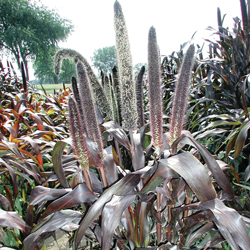
Purple Baron Millet SeedsHere is an ideal choice for mixed containers. This compact yet robust variety will grow 3 feet tall with large thick flower spikes. Purple Baron has a slightly darker color at maturity then Purple Majesty. Package (15 seeds). |
|
|
|
How To Grow Ornamental Millet From Seeds
Germination
- Cover the seed with approximately 0.5 in. of media to prevent seedlings from tipping over.
- Light is not required for germination.
- Sowing 3 or more seeds in the center of the container is recommended.
- Total crop time can be reduced by 2 weeks by direct sowing into the final container.
Plug Production
NOTE: Plugs allowed to become root bound or stressed by drought or nutrient deficiency will not perform well after transplant
Media:
Use a well-drained, disease-free, soil less medium with a pH of 5.5 to 6.3 and a medium initial nutrient charge EC 0.75
Temperature:
- Germination: 72 to 78�F (22 to 25�C)
- Stage 2 to 3: 68 to 72�F (20 to 22�C)
- Hold plugs: 62 to 65�F (16 to 18�C)
- Seed germinates in 4 to 5 days at the recommended temperatures. Temperatures below 68�F (20�C) will significantly delay germination.
Light
Light is not required for germination.
Humidity
As long as the soil is kept evenly moist, high air humidity is not required for germination. Therefore, seed can be germinated directly on the bench.Soil Moisture
Keep soil moisture high until radicle emergence, then reduce moisture levels after the radicle penetrates the medium. Do not allow the seedlings to wilt.Fertilizer
At radicle emergence, apply 50 to 75 ppm N from 15-0-15. Increase to 100 to 150 ppm N as leaves develop.
Growing On to Finish
- Use a well-drained, disease-free, soil less medium with a pH of 5.5 to 6.5 and a medium initial nutrient charge.
- Nights: 64 to 66�F (18 to 19�C)
- Days: 68 to 85�F (20 to 30�C)
Media:
Temperature:
Light
Keep light levels as high as possible. Higher light results in stronger and thicker stems and better basal branching. Young plants are green. The stem and midrib of the foliage first turn purple after about eight leaves have developed. The foliage coloration occurs when the plants are moved from the greenhouse or home to outside to full sun.
Irrigation
Maintain even moisture. Do not allow plants to wilt.Fertilizer
Feed plants weekly with 150 to 200 ppm N in a complete fertilizer.Pinching
Do not pinch.Note: Do not allow the plants to be stunted from water stress, inadequate fertilizer or allow the plants to become root bound. Plants which are stunted in a young stage may produce only a single, short stem.