|
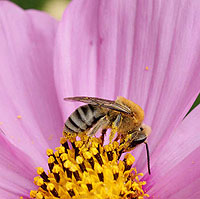
These habitat
and forage areas should never be treated with insecticides or other
harmful chemicals. If insecticides are utilized in the vicinity of bee
habitat, they should be applied when they have the lowest impact possible
on local bee populations. This might entail spraying pesticides only
when bees are not active.
The best time to plant in your area depends on the climate and rainfall patterns as well as the species you are planting. In cool climates, plant annuals, perennials or mixtures of annuals and perennials in spring, early summer or late fall. Fall plantings should be late enough so that seeds do not germinate until spring. Perennials can also be sown in early fall provided that there are at least 10-12 weeks of growing time before the plants go dormant for the winter. Late fall plantings are advantageous when supplemental irrigation cannot be provided and adequate rainfall is anticipated in the spring.
In mild climates, plant during the cooler months of the year; fall through spring, for best results. Fall plantings done prior to periods of rainfall will insure an early display of flowers the following spring.
Moisture
All seeds, including wildflowers, need ample moisture to germinate and to develop into healthy seedlings. Best results will be obtained by soaking the planted areas thoroughly and maintaining consistent moisture for 4-6 weeks -- then gradually reducing watering. In non-irrigated situations, plant in the spring or before periods of anticipated rainfall. After seedlings are established, watering may be reduced depending on the climate and rainfall. In arid climates or during drought conditions, up to 1/2 inch of supplemental water per week may be required to maintain an optimal display. If weeds are present, remember that they benefit from moisture as much as the wildflowers and may dominate over watered areas.
Many wildflowers benefit from some fertilization if the soil does not have adequate nutrients. Some wildflowers do fine in poor soils, while others require a more fertile environment. We recommend that a soil test be performed when soil quality is unknown. If the soil needs improvement, use a low nitrogen fertilizer with a 5-10-10 ratio or add organic matter such as weed-free straw or grass clippings, well-rotted compost, peat moss, or leaf mold. In addition to adding nutrients, organic materials enhance soil structure and encourage beneficial microorganisms. Avoid over-fertilizing which may promote weed growth and lush foliage rather than flowers.SEE WILDFLOWER FOR COMPLETE DIRECTIONS
|


 Read Our Blog
 Find Us On Facebook
 Follow 2BSeeds On Twitter